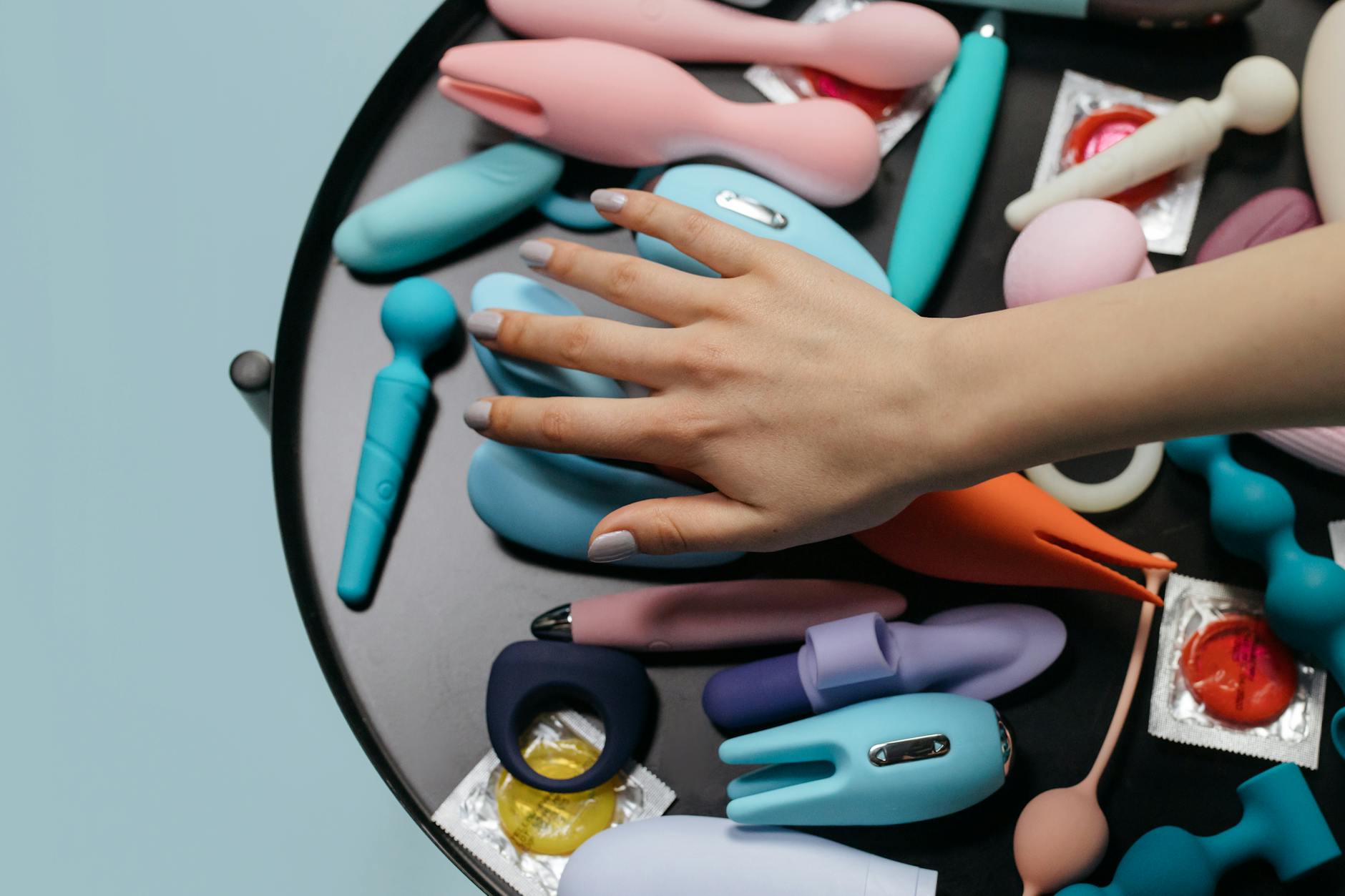
Here's the thing about your body changing
Your body isn't the problem. The disconnect is. Weight shifts, illness, pregnancy, aging, medication, surgery, stress.all of these rewrite the map of what feels good where. And most people respond to that rewriting by doing what feels safest: stopping.
But disconnection deepens with silence. The longer you wait to re-explore, the more foreign the territory becomes. This piece is for anyone rebuilding their relationship with pleasure after their body has changed.
Why pleasure mapping feels different now
When your body shifts, three things happen at once. First, the literal physical sensations change. Your weight distribution changes where pressure feels best. Sensitivity zones move. Arousal buildup alters its rhythm. Second, your mind is running a parallel track of self-consciousness, which kills arousal before it starts. Third, if you've been avoiding touch entirely, your nervous system has gotten used to that avoidance and treats new sensation with suspicion.
Lemon clitoral vibrators actually cut through this triple bind better than traditional vibrators because they work with suction rather than percussion. Suction feels less aggressive against unfamiliar tissue. It doesn't require friction that might feel raw or too intense. And because the sensation is concentrated and precise, it gives your brain something specific to focus on instead of the bigger picture of your body.
Start with permission, not pressure
Before you touch yourself with a Lemon Vibrator or any tool, this matters: you are not trying to prove anything. You are not racing back to how you used to feel. You are not checking a box.
You are gathering information. That's it.
Set aside 20 to 30 minutes when you're alone and won't be interrupted. Not rushed. Not squeezed between tasks. The nervous system knows when you're half-present, and it shuts down.
Dim the lights. Temperature matters more now than it used to, so a blanket or robe within reach makes a difference. You're not building toward anything. You're just... noticing.
The reconnection sequence
Step one: External landscape. Before the Lemon Vibrator comes out, spend five minutes just touching your vulva with your hands. No goal. No agenda. Notice where sensation is dull. Where it's sharp. Where it feels good. Your body will tell you where it's ready to engage.
Step two: Lubrication. Use a water-based lube even if you think you don't need it. Your body's response to touch may be slower now, and lubrication removes friction that can feel uncomfortable or distracting. It's not a failure. It's equipment.
Step three: Introduction. Turn on the Lemon Vibrator at the lowest setting. Don't press it to your clit yet. Let the sensation travel your inner thighs, your labia, the area around your clit. Let your nervous system acclimate.
Step four: Positioning. When you bring the Lemon Vibrator to your clit, you might find that your old angle doesn't work anymore. Experiment. Slight changes in angle, pressure, or position can flip the switch from "nothing" to "oh."
Many people with weight changes find that lying on their side with one leg raised works better than traditional positions. Some find that tilting their pelvis forward or backward changes how sensation lands. There's no correct position. There's only the position that works for you right now.
What to do when pleasure feels complicated
Lowkey, body changes often bring up feelings that have nothing to do with sensation itself. Grief. Frustration. Disconnection from your partner. Anger at your body. These feelings are legitimate and they're also pleasure killers.
If you're with a partner, let them know what you're doing. "I'm learning what feels good now" is a complete sentence. You don't owe anyone the process. But secrecy tends to pile shame on top of disconnection.
If shame keeps showing up mid-pleasure, pause. Seriously. Shame in your body during solo exploration is your nervous system saying "this isn't safe." That's information. Sometimes you need three separate 15-minute sessions instead of one 30-minute session. Sometimes you need a week of just touching before you introduce any tool. There's no rush.
This is also a moment to check in with whether your self-talk during pleasure has shifted. If you're narrating your body's flaws while trying to feel good, that's a separate issue from sensation. That's your mind blocking the body. Consider working with a therapist who specializes in embodiment or body image. Pleasure is a skill, and it's one you can relearn even if your body has rewritten itself completely.
Building stamina and sensitivity at your own pace
After weight shifts, arousal often takes longer to build and might feel less intense at first. That's not permanent. That's just the current state. Consistent, low-pressure exploration (three to four times a week) rewires the pathways.
When you're using a Lemon Vibrator, resist the temptation to jump straight to high intensity. Work with settings one and two for at least two to three weeks. Your body needs time to remember what pleasure feels like. Jumping to maximum setting is like starting a new fitness routine by sprinting. Your nervous system will quit.
Once you're comfortable at lower settings, you can experiment with intensity ramps. Start at pattern one, stay there for 90 seconds, then move to pattern two. Let your body tell you when it's ready to increase. Most people find that when sensitivity has been rebuilt, they actually prefer moderate intensity over maximum.
Bringing a partner into the process
If you're coupled and your partner has been waiting for you to "come back" to sex, here's the conversation that needs to happen first: this is not about them. Your body did not change to hurt them. Your pleasure is not a gift you owe them or a performance you're staging.
Once you've done solo exploration for a few weeks and you feel tethered back to your own sensation, you can invite your partner to be present. This is not the same as having sex. It's you doing what you've been practicing while they're there, perhaps touching you elsewhere, perhaps just witnessing.
Many people find that being watched by someone they trust during this relearning process actually rebuilds intimacy faster than trying to jump back into partnered sex. It says "I trust you with this vulnerable thing I'm rebuilding."
Your partner might need their own support processing body changes. That's not your job to fix. If you have kids, a therapist can help both of you navigate the identities you've both shifted into.
When numbness or pain shows up
If sensation has gone completely numb in the area where it used to register pleasure, that sometimes points to nerve issues that aren't about psychology. Worth mentioning to a doctor, especially if the numbness is new.
Pain during any of this is also a signal to stop and reassess. Pain doesn't mean "push through." It means "something needs adjustment." Maybe the angle. Maybe the pressure. Maybe you need to pause for a few days and try again. Maybe you need to talk to a healthcare provider.
Lemon adult toys are designed to be gentle, but gentleness doesn't override physical signals. Your body is not being difficult. It's communicating.
The long view
Reconnecting with pleasure after your body changes is not a sprint to get back to where you were. It's a recalibration. Most people who stick with this process report that their pleasure landscape is actually richer on the other side, not narrower. You know yourself differently now. You've learned what your body actually needs instead of what you assumed it needed.
That knowledge is not small. And it's worth the time it takes to gather it.